A circuit breaker keeps tripping when it detects a problem in an electrical circuit and automatically switches off the power to help prevent damage, overheating, or fire. Although resetting the breaker may restore electricity, repeated tripping is a warning sign that something needs attention.
The problem can occur because of an overloaded circuit, a short circuit, an earth fault, or a faulty electrical appliance. In some cases, the circuit breaker itself may be damaged. Finding the actual cause is important before attempting any repair.
In this guide, you will learn why circuit breakers keep tripping, how to test a circuit breaker safely, and what to do when the problem occurs. We will also explain why a bedroom circuit breaker may trip repeatedly and when you should call a qualified electrician.
Why Does a Circuit Breaker Keep Tripping?
A circuit breaker is designed to interrupt the flow of electricity when it detects an unsafe condition. It protects electrical wiring and connected equipment from excessive current and certain electrical faults.
Here are the most common reasons a circuit breaker keeps tripping.
1. Circuit Overload
An overloaded circuit is one of the most common causes of repeated breaker tripping.
Every circuit has a maximum current rating. When the connected appliances draw more current than the circuit can safely handle, the breaker trips to prevent the wires from overheating.
For example, using an electric heater, iron, kettle, and air conditioner on the same circuit may exceed its rated capacity.
Possible signs of an overloaded circuit:
- The breaker trips after several minutes of using multiple appliances.
- It stays on when fewer appliances are connected.
- The problem occurs more frequently during periods of heavy electrical use.
To reduce the load, disconnect unnecessary appliances and avoid operating several high-power devices on the same circuit.
2. Short Circuit
A short circuit happens when electrical conductors make an unintended connection, such as when a live wire touches a neutral wire.
This creates a very low-resistance path, allowing a large current to flow. The circuit breaker usually trips almost immediately.
Common causes include:
- Damaged appliance power cords.
- Worn-out electrical insulation.
- Loose or incorrectly connected wiring.
- Damaged switches, sockets, or junction boxes.
- Moisture entering electrical equipment.
A short circuit can create sparks, heat, and fire hazards. Do not repeatedly reset a breaker that trips immediately. The wiring or appliance must be inspected to identify the fault.
3. Ground Fault or Earth Leakage
A ground fault occurs when current flows from a live conductor to earth through an unintended path.
It can happen when insulation becomes damaged, or moisture enters an appliance, socket, or electrical installation.
A standard miniature circuit breaker (MCB) may not detect small earth-leakage currents. Residual current devices (RCDs), residual current circuit breakers (RCCBs), and RCBOs provide additional protection against certain earth-fault conditions.
If an RCD or RCCB keeps tripping, possible causes include:
- A faulty electrical appliance.
- Moisture in wiring or equipment.
- Damaged insulation.
- Leakage current from several connected devices.
- A defective protective device.
Never bypass an RCD or remove its earth connection to stop repeated tripping.
4. Faulty Electrical Appliance
Sometimes the electrical circuit is working correctly, but one of the connected appliances has an internal fault.
An appliance with damaged insulation, a defective heating element, or a failing motor may cause excessive current or leakage to earth.
Common examples include:
- Electric water heaters.
- Washing machines.
- Refrigerators.
- Air conditioners.
- Electric irons.
- Microwave ovens.
If the breaker trips whenever you operate a particular appliance, stop using that appliance and arrange an inspection.
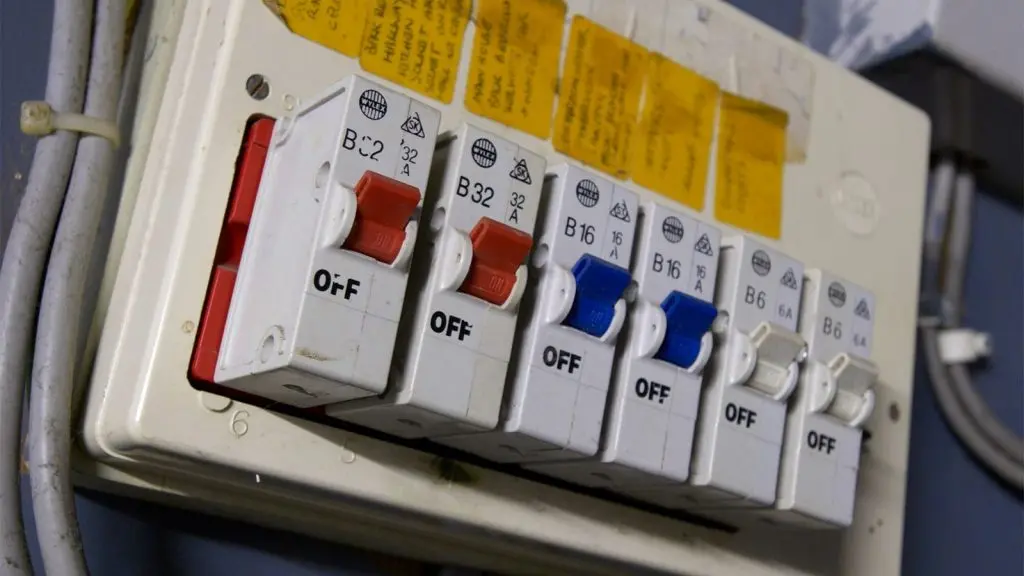
5. Damaged or Faulty Circuit Breaker
Circuit breakers can wear out or become damaged over time. Internal components may weaken, causing the breaker to trip even when the circuit is not overloaded.
Possible signs of a faulty breaker include:
- Frequent tripping without an obvious load-related reason.
- A breaker that feels unusually hot.
- Visible burning marks or discoloration.
- A buzzing or crackling sound.
- A breaker that will not remain in the ON position.
A damaged breaker should be inspected and replaced by a qualified electrician. Never install a breaker with a higher current rating simply to prevent tripping.
6. Loose Electrical Connections
Loose connections can create resistance and heat at terminals, switches, sockets, and distribution boards.
In some cases, the resulting heat can cause damage or contribute to abnormal operation of protective devices.
Signs may include:
- Burning smells near switches or the distribution board.
- Discolored sockets or electrical terminals.
- Flickering lights.
- Crackling or buzzing sounds.
Loose connections are a serious fire hazard. Do not open an energized distribution board or attempt to tighten live electrical terminals.
What to Do If a Circuit Breaker Keeps Tripping
If your circuit breaker trips repeatedly, follow these safety steps before considering any repair.
Step 1: Identify the Tripped Breaker
Check your distribution board and identify which breaker has switched off.
Some breakers move to the OFF position, while others move to an intermediate position between ON and OFF.
If the breaker is an RCD, RCCB, or RCBO, it may be responding to earth leakage rather than a simple overload.
Step 2: Disconnect Electrical Appliances
Switch off and unplug accessible appliances connected to the affected circuit.
Pay particular attention to high-power appliances such as heaters, kettles, irons, and air conditioners.
Do not touch appliances, plugs, or sockets that are wet, damaged, unusually hot, or showing signs of burning.
Step 3: Reset the Breaker Once
If there are no visible signs of damage, smoke, burning smells, or moisture, you can attempt one reset.
Move the breaker fully to OFF and then back to ON, following its operating instructions.
If it trips immediately, do not keep resetting it. Leave it switched off and contact a qualified electrician.
Step 4: Check for a Faulty Appliance
If the breaker remains on with appliances disconnected, a connected appliance may be responsible.
You can reconnect ordinary, undamaged appliances one at a time, provided the circuit remains safe and the breaker does not trip.
If the breaker trips after reconnecting a particular appliance, stop using it.
Do not use this process to investigate damaged, wet, hardwired, or high-power equipment.
Step 5: Call a Qualified Electrician
If the breaker continues tripping after appliances are disconnected, the problem may involve fixed wiring, a damaged socket, an earth fault, or a defective breaker.
A qualified electrician can test the installation and identify the actual cause.
How to Test a Circuit Breaker That Keeps Tripping
Testing a circuit breaker requires appropriate electrical test equipment and knowledge of electrical safety. A visual inspection and basic observations can help identify warning signs, but they cannot confirm that a breaker is operating correctly.
The following checks should be performed by a qualified electrician.
1. Inspect the Breaker
The electrician should check the breaker for physical damage, overheating, discoloration, unusual noise, and signs of poor terminal connections.
Any evidence of burning or heat damage requires further investigation before the circuit is returned to service.
2. Check the Circuit Current
A suitable clamp meter can measure the current flowing through an individual circuit conductor.
The measured current can then be compared with the circuit design, cable rating, and breaker rating.
If the current exceeds the permitted value, the electrician should investigate the connected load and circuit design.
3. Perform an Insulation Resistance Test
An insulation resistance tester, often called a megohmmeter, can help identify damaged insulation between conductors and between conductors and earth.
This test must be performed with the circuit safely isolated. Sensitive electronic equipment and devices must be disconnected or protected according to the manufacturer’s instructions.
4. Check Earth Leakage
A suitable leakage-current clamp meter can help measure current flowing through protective earth paths or identify residual current in a circuit.
For RCD protection, an appropriate RCD tester can verify operating current and trip time against the device’s specifications and applicable requirements.
5. Verify Breaker Operation
A qualified electrician can use appropriate test equipment to check whether the breaker operates within its specified characteristics.
A breaker that fails testing should be replaced with a suitable device that matches the circuit design and manufacturer’s requirements.
Important: Never test a live distribution board unless you are properly qualified, equipped, and authorized to do so. Do not use a multimeter as a substitute for specialist breaker-testing equipment.
Bedroom Circuit Breaker Keeps Tripping: What Could Be the Reason?
When a bedroom circuit breaker keeps tripping, the problem may be related to the appliances, wiring, or electrical accessories installed in that room.
Here are some common possibilities.
Too Many Appliances on One Circuit
Bedrooms may contain air conditioners, heaters, computers, televisions, irons, and other electrical devices.
If several high-power appliances operate simultaneously, their combined current may exceed the circuit’s capacity.
Faulty Air Conditioner
An air conditioner can trip a breaker because of a compressor fault, damaged wiring, a failing motor, or another electrical problem.
If the breaker trips when the air conditioner starts, stop using the unit and arrange professional inspection.
Damaged Socket or Extension Lead
A damaged socket, loose connection, or defective extension lead may cause overheating or an electrical fault.
Stop using any socket or extension lead that shows burning marks, unusual heat, sparks, or a burning smell.
Moisture or Damaged Wiring
Water entering a wall socket or damaged wiring inside a wall can cause leakage or short circuits.
If the problem occurs after rain, cleaning, or water leakage, moisture may be involved. Keep the affected circuit switched off until it has been inspected.
How to Fix a Circuit Breaker That Keeps Tripping
The correct solution depends on the cause of the problem. Resetting the breaker repeatedly does not fix the underlying fault.
Here are common problems and their appropriate solutions.
| Problem | Appropriate solution |
|---|---|
| Circuit overload | Reduce the connected load or have the circuit capacity reviewed |
| Short circuit | Locate and repair the damaged wiring or faulty equipment |
| Earth leakage | Identify the leakage source and repair the insulation or equipment fault |
| Faulty appliance | Stop using the appliance and arrange repair or replacement |
| Loose connection | Have the connection inspected and repaired safely |
| Defective breaker | Replace it with a correctly rated, compatible protective device |
A qualified electrician should determine whether the circuit needs repair, load redistribution, or a different protective arrangement.
Never replace a breaker with one that has a higher current rating unless the wiring and circuit design have been assessed and the change is approved. The breaker protects the cable, not just the appliances.
How to Prevent Circuit Breakers from Tripping
You can reduce the chances of repeated tripping by following good electrical practices.
- Avoid connecting too many high-power appliances to one circuit.
- Do not overload extension leads or multi-plug adapters.
- Replace damaged power cords and electrical accessories.
- Keep electrical appliances away from water and excessive moisture.
- Have old or damaged wiring inspected by a qualified electrician.
- Use correctly rated circuit breakers and protective devices.
- Arrange periodic electrical inspections, especially in older buildings.
- Never bypass protective devices or ignore repeated tripping.
Conclusion
When a circuit breaker keeps tripping, it is usually responding to an electrical problem that needs attention. Common causes include circuit overloads, short circuits, earth leakage, faulty appliances, loose connections, and damaged breakers.
Start by identifying the affected circuit and disconnecting accessible appliances. If the breaker trips again, leave it switched off and contact a qualified electrician.
Remember that a circuit breaker is an important safety device. Repeatedly resetting it or installing a higher-rated breaker without checking the wiring can increase the risk of electric shock, overheating, and electrical fires.
FAQs
1. Why does my circuit breaker keep tripping with nothing plugged in?
The problem may be caused by damaged fixed wiring, a faulty switch or socket, moisture, earth leakage, or a defective breaker. A qualified electrician should inspect the circuit to identify the fault.
2. Can a bad circuit breaker trip randomly?
Yes. An internally damaged or worn-out breaker may trip unexpectedly. However, random tripping can also indicate an intermittent wiring fault, overload, or leakage current. The cause should be confirmed before replacing the breaker.
3. Is it safe to keep resetting a circuit breaker?
No. Repeatedly resetting a breaker without identifying the cause can expose wiring and equipment to dangerous conditions. If it trips again after one safe reset, leave it OFF and arrange professional inspection.