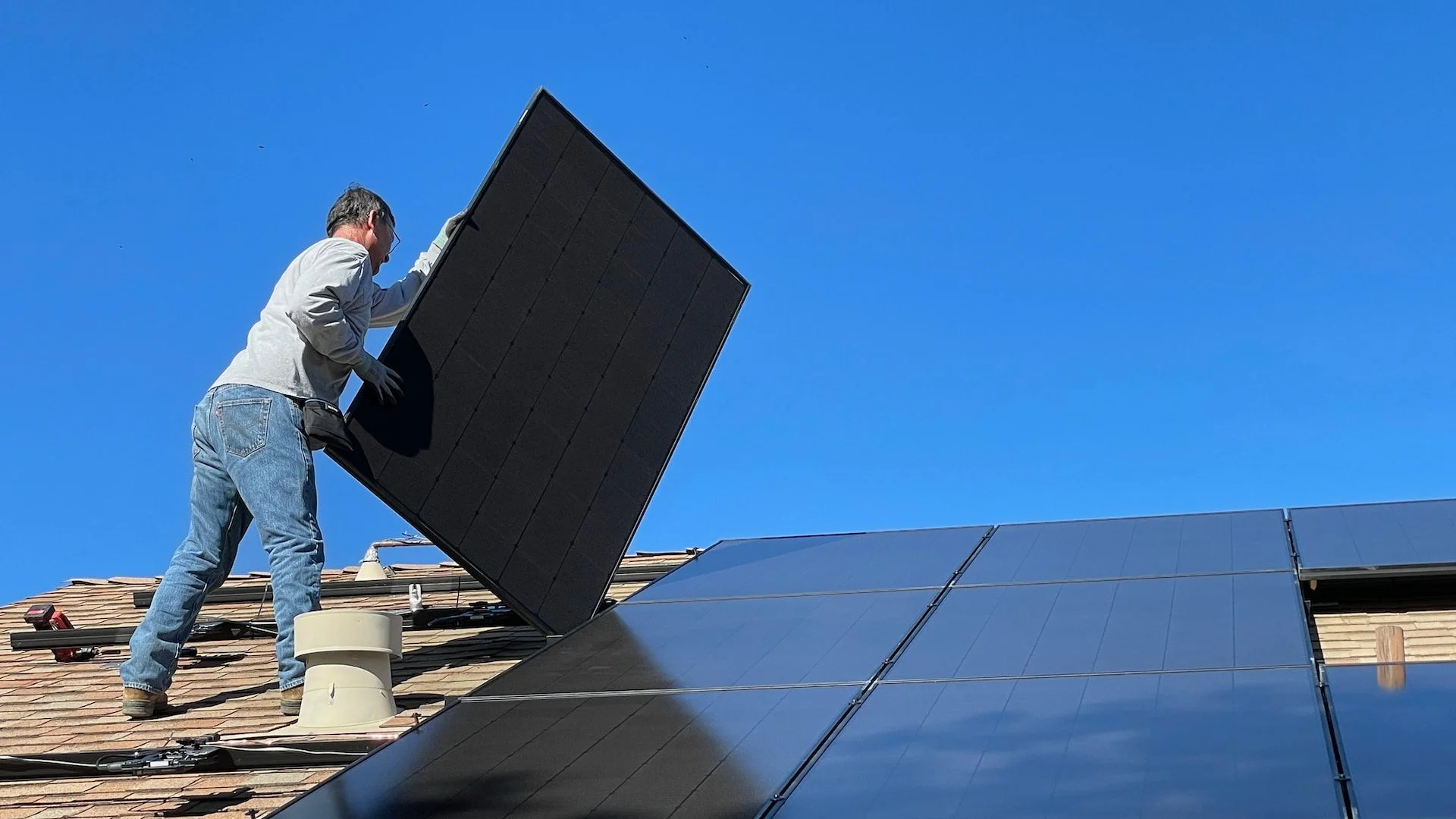
If your electricity consumption has increased or your current solar system no longer produces enough power, you may be wondering how to add solar panels to an existing system. The good news is that you can often expand an existing solar installation without replacing everything. However, the process depends on your inverter capacity, panel specifications, wiring configuration, and available installation space.
Adding more panels may seem simple, but connecting new modules to an existing system without checking compatibility can cause performance problems or damage equipment. In this guide, you will learn how to check your current system, choose compatible panels, estimate the cost, and understand different expansion methods, including microinverters.
Can I Add More Solar Panels to My Existing System?
Yes, you can add more solar panels to your existing system in most cases. However, your inverter and electrical setup must support the additional capacity.
Before buying new panels, check these important factors:
- Inverter capacity: Your inverter must support the additional DC input power and remain within its voltage and current limits.
- MPPT capacity: The maximum input current and voltage of each MPPT must not be exceeded.
- Panel compatibility: New panels should have suitable electrical characteristics for the existing string or configuration.
- Available roof space: You need enough suitable space with minimal shading.
- Electrical protection: Existing cables, isolators, fuses, breakers, and connectors must be suitable for the increased current and power.
- Utility approval: Grid-connected systems may require updated approval or inspection when their capacity increases.
For example, suppose you have a 5 kW inverter connected to 4 kW of solar panels. You may be able to add more panels, depending on the inverter’s permitted DC oversizing ratio and its maximum PV input specifications.
However, if the inverter has already reached its maximum permitted PV input capacity, adding panels directly may not be possible.
How to Check Your Existing Solar System Before Expansion
The first step is to understand what equipment you already have. Do not purchase additional panels until you have checked the system specifications.
1. Check Your Solar Inverter Specifications
Your inverter is one of the most important components when expanding a solar system.
Find its model number and check the manufacturer’s datasheet for:
- Rated AC output power.
- Maximum PV input power.
- Maximum DC input voltage.
- MPPT operating voltage range.
- Maximum input current per MPPT.
- Maximum short-circuit current per MPPT.
- Number of independent MPPT inputs.
For example, an inverter may have a 5 kW AC rating and a maximum PV input power of 6.5 kW. This does not automatically mean every 6.5 kW panel arrangement is acceptable. Voltage, operating current, short-circuit current, and MPPT limits must also be checked.
2. Check Your Existing Solar Panels
Look at the labels on your existing panels or find their datasheets.
Important electrical values include:
- Maximum power (Pmax).
- Open-circuit voltage (Voc).
- Maximum power voltage (Vmp).
- Short-circuit current (Isc).
- Maximum power current (Imp).
These values help determine whether the new panels can work with your existing array.
Using panels with different electrical characteristics in the same series string can reduce performance. In particular, the string current may be limited by the panel with the lowest current capability.
3. Check Your Existing Wiring Configuration
Find out how your existing panels are connected.
Solar panels can be connected in:
- Series: Panel voltages add together, while current remains approximately the same.
- Parallel: Panel currents add together, while voltage remains approximately the same.
- Series-parallel: Both voltage and current increase according to the arrangement.
For example, four panels rated at 40 V and 10 A connected in series produce approximately 160 V at 10 A under their rated operating conditions.
The same four panels connected in parallel produce approximately 40 V at 40 A.
These are simplified examples. Actual operating values depend on sunlight, temperature, and panel characteristics.
Never add panels to an existing string without checking the inverter’s voltage and current limits, including the higher open-circuit voltage that panels can reach in cold conditions.

How to Add Solar Panels to an Existing System
Once you understand your current system, you can choose the most suitable expansion method.
Method 1: Add Panels to an Existing String
This method is possible when your inverter supports additional panels and the new modules are electrically compatible with the existing string.
For example, suppose your solar system has eight panels for your home connected in series. If the inverter supports higher string voltage and current, you may add additional compatible panels.
However, you must check:
- Total string open-circuit voltage at the lowest expected temperature.
- Total operating voltage.
- String operating current.
- Maximum inverter input current.
- Maximum short-circuit current.
- Panel compatibility.
This approach can be economical because you may not need another inverter.
Important: Do not simply connect another panel in series because the inverter has unused capacity. The complete string must remain within every electrical limit.
Method 2: Use a Separate MPPT Input
Some solar inverters have two or more independent MPPT inputs.
If one MPPT is already connected to your existing panels, you may be able to connect additional panels to another MPPT.
This is often a good option when the new panels have different orientations or specifications.
For example:
- Existing panels face south.
- New panels face west.
- The existing array uses MPPT 1.
- The new array uses MPPT 2.
Separate MPPTs allow the inverter to track the power output of each group independently.
However, check the input limits for each MPPT. Some inverter models have separate current limits, while others share certain internal limits between inputs.
Method 3: Install a Second Solar Inverter
If your existing inverter cannot handle additional panels, installing another inverter may be a practical solution.
The new inverter operates alongside your existing inverter, with each unit managing its own solar array.
For example:
- Existing system: 5 kW inverter with 5 kW of panels.
- New system: 3 kW inverter with 3 kW of additional panels.
The combined system has 8 kW of inverter capacity and 8 kW of solar panels, assuming the equipment and installation are properly designed.
Before choosing this method, check:
- Grid connection and export limits.
- Electrical distribution board capacity.
- AC cable and breaker ratings.
- Earthing and protection arrangements.
- Monitoring requirements.
- Utility approval and applicable regulations.
A second inverter can be more expensive than adding panels to an existing inverter, but it provides flexibility when the original inverter has no remaining capacity.
Method 4: Add Panels Using Microinverters
If you want to expand your solar system without modifying its existing DC string arrangement, microinverters may be another option.
A microinverter converts the DC power from one or more solar panels into AC power near the panels. Each microinverter operates independently from the central string inverter.
For example, suppose your existing system uses a 5 kW string inverter. You could potentially install two additional panels with compatible microinverters and connect their AC output to an approved circuit.
This arrangement can be useful when:
- Your existing string inverter has reached its PV input limit.
- The new panels face a different direction.
- The new panels experience different shading conditions.
- You want independent monitoring of the additional panels.
However, microinverters are not automatically compatible with every existing solar installation.
You must check:
- Microinverter AC voltage and frequency.
- Maximum AC output current.
- Approved grid connection method.
- Branch circuit and cable capacity.
- Required overcurrent protection.
- Manufacturer compatibility requirements.
- Utility interconnection and export limits.
Some manufacturers also provide specific integration methods for combining microinverter systems with existing solar installations.
Do not connect the AC output of a microinverter to an arbitrary point in an existing solar circuit. The connection must follow the manufacturer’s instructions and applicable electrical regulations.
Method 5: Use a Hybrid Inverter or Battery-Compatible Expansion
If you are planning to add battery storage as well as more panels, a hybrid inverter may be worth considering.
A hybrid inverter can manage solar generation, battery charging, and grid interaction, depending on its design.
However, replacing an existing inverter with a hybrid model is not always necessary. Some systems support AC-coupled battery storage or additional PV equipment.
Choose the arrangement according to your energy requirements, existing equipment, and future expansion plans.
How Hard Is It to Add Solar Panels to an Existing System?
Adding solar panels to an existing system can be relatively straightforward or technically complicated, depending on the equipment.
Here is a general comparison:
| Expansion method | Difficulty | Main consideration |
|---|---|---|
| Adding panels to an existing string | Medium to high | Voltage and current compatibility |
| Using another MPPT input | Medium | Independent MPPT limits |
| Installing a second inverter | High | AC integration and grid approval |
| Adding microinverters | Medium to high | AC circuit and interconnection design |
| Replacing the existing inverter | High | System redesign and commissioning |
If your inverter has unused input capacity and the new panels match the existing string, expansion may be relatively simple for a qualified installer.
However, if you need a second inverter, new protection equipment, or changes to your distribution board, the work becomes more complicated.
The most important point is that solar expansion involves both DC and AC electrical systems. It should be designed and installed by a qualified solar professional.
How Much Does It Cost to Add Solar Panels to an Existing System?
The cost of adding solar panels depends on the number of panels, their wattage, inverter compatibility, mounting equipment, wiring, and installation labor.
If your existing inverter can support the additional panels, expansion may cost considerably less than installing a completely new solar system.
The following table provides illustrative planning ranges in US dollars. These are not live market quotations or universal installation prices.
| Expansion option | Illustrative cost |
|---|---|
| One additional 400–550 W panel | $100–$250 |
| One panel with installation and mounting | $150–$400 |
| Two additional panels | $300–$800 |
| Four additional panels | $600–$1,600 |
| Small microinverter expansion (2 panels) | $400–$1,000 |
| Additional string inverter installation | $800–$2,000+ |
Actual prices can be lower or higher depending on the country, equipment brand, labor costs, roof conditions, and electrical upgrades.
These estimates should be treated as preliminary budgeting figures. Obtain local quotations before making a purchase.
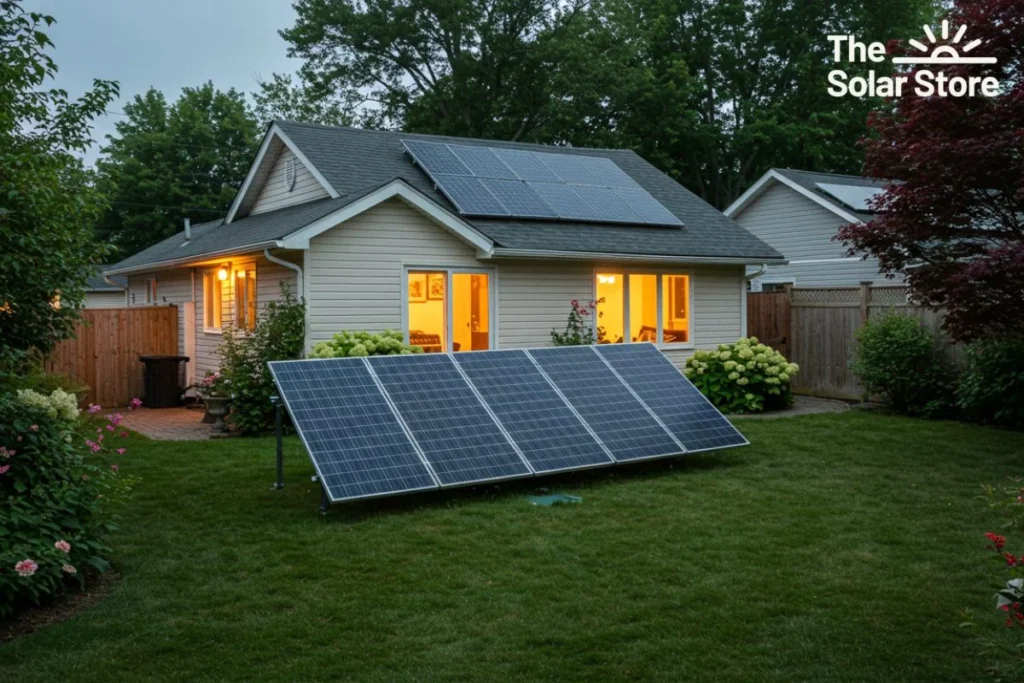
How Much Does It Cost to Add One More Solar Panel to an Existing System?
If you only want to add one more panel, the cost may be relatively low.
For example, a 450 W solar panel might cost approximately $100–$250. Mounting hardware, wiring, connectors, labor, and any required protection equipment may increase the total to around $150–$400.
However, the cost can increase significantly if your existing inverter cannot accept the additional panel.
You may need:
- A separate microinverter.
- An additional MPPT-compatible inverter.
- New DC or AC wiring.
- Additional protection equipment.
- A system redesign or inspection.
Adding just one panel is not always the cheapest option if it requires new equipment.
What Factors Affect Solar Panel Expansion Costs?
Several factors determine the final price:
1. Solar panel wattage: Higher-wattage panels may produce more energy per panel, but their electrical characteristics must match the system requirements.
2. Inverter compatibility: If your existing inverter supports the additional panels, you may avoid purchasing another inverter.
3. Mounting structure: Additional roof rails, clamps, brackets, and other mounting components add to the cost.
4. Wiring and protection: Longer cable runs, additional isolators, breakers, and other protection equipment may be required.
5. Installation labor: Roof accessibility, roof type, and the complexity of the existing installation affect labor costs.
6. Permits and inspections: Some grid-connected systems require approval or inspection before their capacity can be increased.
Example: Expanding a 5 kW Solar System
Suppose you have the following installation:
- Existing inverter: 5 kW.
- Existing solar panels: 10 × 450 W.
- Total existing panel capacity: 4.5 kW.
- Proposed additional panels: 2 × 450 W.
- New total panel capacity: 5.4 kW.
The new panel capacity would be:
Existing capacity:
10 × 450 W = 4,500 W = 4.5 kW
Additional capacity:
2 × 450 W = 900 W = 0.9 kW
New total capacity:
4.5 kW + 0.9 kW = 5.4 kW
The inverter’s 5 kW AC rating does not automatically prevent this expansion. Some inverters allow DC input capacity above their AC output rating.
However, the proposed 5.4 kW array must still comply with the inverter’s maximum PV input power, MPPT voltage range, input current, and short-circuit current limits.
The example shows why checking the datasheet is more important than comparing panel capacity with the inverter’s AC rating alone.
Common Mistakes to Avoid When Adding Solar Panels
Before expanding your solar installation, avoid these common mistakes:
1. Ignoring the Maximum PV Input Voltage
Connecting too many panels in series can exceed the inverter’s maximum DC voltage.
This can damage the inverter and create a serious safety hazard.
2. Mixing Incompatible Panels
Panels with different current and voltage characteristics may not operate efficiently when connected in the same string.
Always check their electrical specifications before combining them.
3. Exceeding the MPPT Current Limit
Adding panels in parallel increases current. If the combined current exceeds the inverter’s input limit, the system may operate incorrectly or become unsafe.
4. Ignoring Shading
A new panel installed in a shaded area may produce less energy than expected. Consider roof orientation, nearby trees, buildings, and seasonal shading.
5. Using Undersized Cables
Additional panels can increase current, requiring a review of cable size, voltage drop, connector ratings, and protective devices.
6. Ignoring Grid Approval
Increasing the capacity of a grid-connected system may require utility approval or updated documentation.
Check the requirements before installation.

Is It Better to Add Panels or Install a New Solar System?
The best choice depends on your existing equipment and future energy needs.
| Your situation | Recommended option |
|---|---|
| Inverter has unused PV capacity | Add compatible panels |
| Inverter has another suitable MPPT | Use the additional MPPT |
| Existing inverter is at its limits | Consider a second inverter |
| New panels have different orientations | Consider a separate MPPT or microinverters |
| Planning battery storage | Evaluate a hybrid or AC-coupled solution |
| Existing inverter is old or unreliable | Consider replacing the inverter |
If your existing equipment is in good condition and supports expansion, adding panels is often more economical than replacing the entire system.
However, if you expect your electricity consumption to increase significantly, a larger system may offer better long-term value.
Conclusion
Learning how to add solar panels to an existing system starts with checking your inverter, panel specifications, wiring, and available capacity. You may be able to expand your system by adding panels to an existing string, using another MPPT input, installing a second inverter, or integrating microinverters.
The cost depends on how much additional equipment and electrical work is required. Adding one panel can be inexpensive when your existing inverter supports it, but the cost increases if a separate inverter or major wiring changes are necessary.
Before purchasing new panels, review the inverter datasheet and have the proposed arrangement checked by a qualified installer. A properly designed expansion can increase your solar production while making good use of your existing equipment.
Frequently Asked Questions
1. Can I add more solar panels to my existing system?
Yes. You can add more solar panels if your inverter, MPPT inputs, wiring, and protection equipment support the additional capacity. Check the manufacturer’s specifications before connecting new panels.
2. How hard is it to add solar panels to an existing system?
It depends on your existing installation. Adding compatible panels to an available MPPT input may be relatively straightforward, while installing another inverter or modifying the AC distribution system requires more planning and electrical work.
3. How much does it cost to add solar panels to an existing system?
The cost depends on panel wattage, installation labor, mounting equipment, wiring, and inverter compatibility. A single additional panel may cost approximately $150–$400 installed in the illustrative pricing used in this guide, but local quotations are necessary for an accurate estimate.
4. Can I add solar panels to an existing system with microinverters?
Yes. Microinverters can allow additional panels to operate independently of an existing string inverter. However, the AC connection, circuit capacity, protection, grid approval, and manufacturer requirements must be checked before installation.
5. Do I need a bigger inverter when adding more solar panels?
Not necessarily. Some inverters allow a DC solar array capacity greater than their rated AC output. You only need a bigger or additional inverter when the proposed expansion exceeds the existing inverter’s permitted input limits or when other system requirements make it necessary.