Cable ties are widely used in electrical installations, industrial equipment, construction projects, and cable management systems. Although they are relatively small components, selecting the wrong type can lead to damaged cables, loose bundles, premature failure, and unnecessary maintenance costs.
For electrical distributors, industrial contractors, wholesalers, and procurement managers, sourcing cable ties in bulk requires more than comparing prices. Buyers must consider material, tensile strength, dimensions, temperature resistance, UV protection, packaging, and supplier reliability.
Whether purchasing a few cartons or thousands of units for large-scale projects, understanding these factors can help businesses make better purchasing decisions and maintain consistent product quality.
This guide explains the different types of cable ties, their industrial applications, important specifications, and how to evaluate manufacturers when purchasing in bulk.
1. Understand the Different Types of Cable Ties
Before contacting a supplier, identify which cable ties are suitable for your application. Different materials and designs provide different levels of strength, flexibility, and environmental resistance.
Some common types include:
Standard Nylon Cable Ties
Standard nylon cable ties are commonly used for electrical wiring, cable bundling, and general-purpose fastening. They are available in different lengths, widths, colors, and tensile-strength ratings.
They are suitable for many indoor applications, including electrical panels, wiring harnesses, and equipment organization.
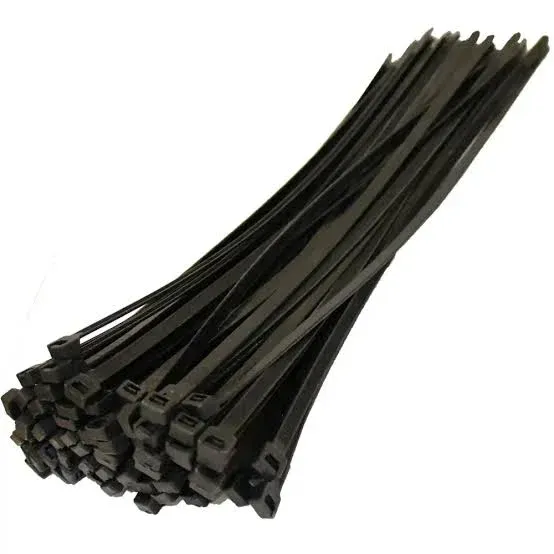
UV-Resistant Cable Ties
Outdoor installations expose cable ties to sunlight, temperature changes, and weather conditions. Ordinary nylon ties may deteriorate faster under prolonged ultraviolet exposure.
UV-resistant cable ties are manufactured with materials or additives designed to improve resistance to sunlight. They are commonly considered for outdoor electrical installations, solar systems, telecommunications, and construction projects.
Heavy-Duty Cable Ties
Heavy-duty cable ties are designed for applications requiring greater tensile strength and fastening capacity.
They are available in larger dimensions and may be used in industrial equipment, machinery, construction, and heavy cable management.
However, buyers should check the manufacturer’s rated tensile strength rather than assuming that a wider tie is automatically suitable for every heavy-duty application.
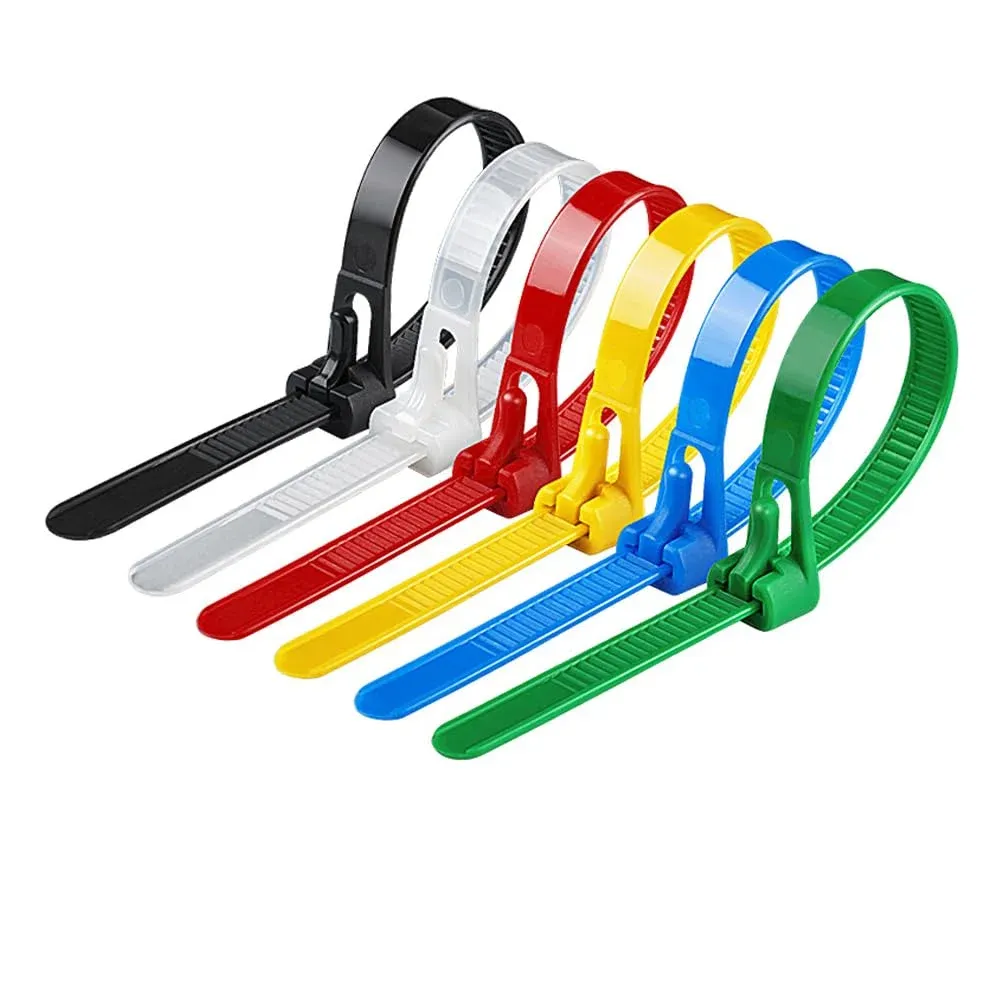
Releasable Cable Ties
Releasable cable ties include a mechanism that allows the fastening to be opened and reused.
They can be useful for temporary installations, maintenance work, testing environments, and applications where cables may need to be rearranged.
Stainless Steel Cable Ties
Stainless steel cable ties are used in environments where conventional plastic ties may not provide sufficient resistance to heat, chemicals, or harsh operating conditions.
They are commonly considered for industrial facilities, outdoor installations, and certain demanding electrical applications.
The appropriate grade and construction should be selected according to the environment, corrosion exposure, and mechanical requirements.
2. Important Specifications to Check Before Buying Cable Ties
Cable ties may look similar, but their performance can vary considerably. Buyers should compare technical specifications before placing a bulk order.
Material
Material selection affects flexibility, strength, temperature resistance, and durability.
Common materials include nylon 6/6 and other engineering plastics. Stainless steel is another option for specialized applications.
For example, nylon 6/6 cable ties are widely used in general electrical and industrial applications, while UV-stabilized materials may be more appropriate for outdoor use.
Tensile Strength
Tensile strength indicates the maximum pulling force a cable tie can withstand under specified test conditions.
It is an important specification when selecting ties for large cable bundles or industrial applications.
Buyers should review the manufacturer’s documented tensile-strength ratings and testing methods. The required strength depends on the bundle size, installation conditions, and intended application.
Cable ties should not be used as structural lifting or load-bearing devices unless specifically designed and rated for that purpose.
Length and Width
Cable ties are available in different lengths and widths to accommodate different bundle diameters.
A tie that is too short may not close properly, while an excessively long tie can create unnecessary waste and installation difficulties.
Before purchasing, determine the typical bundle diameter and select suitable dimensions.
Temperature Resistance
Electrical and industrial environments can expose cable ties to elevated or low temperatures.
The selected material should operate within the temperature range specified by the manufacturer.
This is particularly important in control panels, machinery, engine compartments, and installations near heat-generating equipment.
UV and Chemical Resistance
Outdoor installations require consideration of sunlight exposure, moisture, and weather conditions.
Industrial environments may also involve oils, cleaning agents, solvents, or other chemicals.
Buyers should confirm that the selected cable tie material is compatible with the expected environmental conditions.
Flammability Rating
For certain electrical and industrial applications, flammability characteristics may be an important selection factor.
Where required, check the manufacturer’s test documentation and applicable product standards rather than relying on general descriptions such as flame-retardant or fire-resistant.
3. Choosing Cable Ties for Different Industrial Applications
The right cable tie depends on where and how it will be used. A product suitable for indoor cable organization may not perform well in an outdoor or high-temperature environment.
Electrical Control Panels
Cable ties help organize conductors, manage wiring harnesses, and maintain orderly cable routing inside electrical control panels.
When selecting them, consider:
- Suitable dimensions for the wire bundles.
- Material temperature rating.
- Compatibility with the installation environment.
- Appropriate fastening pressure.
- Requirements for inspection and maintenance.
Cable ties should not be tightened excessively because this can damage conductor insulation or affect cable performance. They must also be installed without violating minimum bend-radius requirements.
Solar Installations
Solar installations use cable ties to organize and secure certain cables along suitable support structures.
Outdoor solar applications require careful consideration of ultraviolet exposure, temperature changes, and long-term environmental conditions.
UV-resistant cable ties may be suitable where their specifications match the installation requirements.
Cable ties should not replace approved cable clips, supports, or fastening systems where those are required by the solar equipment manufacturer or applicable installation standards.
Industrial Machinery
Industrial machinery often contains wiring harnesses, control cables, and sensor connections that need proper organization.
Cable ties used in these environments may need to withstand vibration, temperature changes, oils, and mechanical exposure.
The selection should account for the equipment manufacturer’s recommendations and the possibility of cable movement during operation.
Construction Projects
Construction contractors use cable ties for temporary cable organization, bundling, and general-purpose fastening.
Outdoor projects may require UV-resistant products, while indoor applications may use standard nylon ties depending on the operating conditions.
Cable ties should not be treated as substitutes for approved structural fasteners or permanent support systems.
Warehouses and Logistics
Cable ties are also used in warehouses for packaging, product bundling, temporary identification, and organizing equipment.
For these applications, purchasing decisions may focus on dimensions, color options, packaging quantities, and ease of use.
4. How to Evaluate a Cable Tie Manufacturer
Selecting a supplier is an important part of bulk purchasing. A low unit price may appear attractive, but inconsistent specifications or unreliable deliveries can increase the overall cost.
A structured supplier evaluation helps businesses compare manufacturers using measurable criteria.
Request Technical Documentation
Ask the manufacturer for product specifications covering:
- Material composition.
- Length and width.
- Tensile strength.
- Operating temperature range.
- UV resistance, where applicable.
- Relevant product testing and certifications.
Documentation should correspond to the exact product being purchased.
Check Product Consistency
For repeat orders, consistency is important. Changes in dimensions, material quality, or fastening performance can affect installation standards and customer satisfaction.
Where possible, request samples and compare them against the manufacturer’s specifications before committing to a large purchase.
Review Manufacturing Capabilities
Buyers should understand whether a supplier manufactures products directly or sources them from other producers.
A manufacturer may be able to discuss production specifications, available materials, packaging arrangements, and customization requirements more directly.
However, manufacturing claims should be verified through appropriate business documentation and supplier checks.
Compare Minimum Order Quantities
Different manufacturers have different minimum order requirements.
Wholesale buyers should confirm:
- Minimum order quantity (MOQ).
- Quantity per carton.
- Available product sizes.
- Volume-based pricing.
- Packaging configurations.
- Availability of mixed-size orders.
This information helps businesses manage inventory and avoid purchasing unnecessary quantities.
Confirm Delivery and Commercial Terms
Before placing an order, clarify production lead times, shipping arrangements, payment terms, and responsibilities for handling damaged or non-conforming products.
For international orders, buyers should also consider freight costs, customs duties, import requirements, and total landed cost.
5. Bulk Cable Tie Purchasing: How to Control Costs
Buying cable ties in bulk can reduce the unit price, but the lowest quotation does not always represent the best purchasing decision.
A more effective approach is to calculate the total cost of acquiring and storing the products.
Consider these factors:
Unit price: Compare quotations for identical materials, dimensions, and tensile-strength ratings.
Shipping costs: Large orders can involve significant freight expenses, particularly for international shipments.
Packaging: Check whether the packaging quantities match your distribution or project requirements.
Product quality: Inconsistent products can lead to installation problems, customer complaints, and replacement costs.
Storage: Nylon products should be stored according to the manufacturer’s recommendations to protect their material properties.
Repeat orders: Establishing consistent specifications can make future purchasing and inventory management easier.
For distributors, maintaining a manageable range of commonly used sizes can also simplify stock control.
6. Questions to Ask Before Placing a Wholesale Order
Before purchasing cable ties from a new supplier, prepare a list of questions to clarify product and commercial requirements.
- What materials are available?
- Which lengths, widths, and colors can be supplied?
- What are the tensile-strength ratings?
- Are UV-resistant or heat-resistant versions available?
- What is the minimum order quantity?
- Can product samples be provided?
- Are test reports or relevant certifications available?
- What packaging and labeling options are offered?
- What are the production and delivery lead times?
- What is the procedure for handling defective or non-conforming products?
These questions help procurement teams evaluate suppliers more effectively and reduce uncertainty before placing large orders.
7. Finding and Comparing Cable Tie Manufacturers
There are several ways to identify potential cable tie suppliers.
Industrial trade directories, manufacturer websites, trade exhibitions, and B2B marketplaces can provide useful starting points.
For example, buyers researching industrial cable ties can review available product categories and compare them with their application requirements.
When evaluating manufacturers, avoid relying exclusively on website descriptions. Request technical documents, samples, quotations, and clear commercial terms.
A useful comparison should include product quality, manufacturing capabilities, minimum order quantities, delivery arrangements, and total landed cost.
8. Building a Reliable Long-Term Supply Relationship
For wholesalers and industrial buyers, sourcing cable ties is often a recurring purchasing activity rather than a one-time transaction.
A reliable supply arrangement depends on clear specifications, consistent product quality, and effective communication.
Businesses should maintain written records of approved product dimensions, materials, tensile-strength requirements, packaging details, and order quantities.
Before moving to large recurring orders, it is sensible to evaluate samples and confirm the supplier’s ability to meet the required specifications.
Buyers comparing manufacturers such as Shangbo Plastics should use the same evaluation process applied to other potential suppliers. This includes verifying product information, requesting samples where available, and confirming production, shipping, and payment arrangements.
Conclusion
Sourcing cable ties for electrical and industrial applications requires more than finding a supplier with competitive prices. Buyers must select products that match their operating conditions, fastening requirements, and quality expectations.
Material, tensile strength, dimensions, temperature resistance, UV protection, and product documentation are all important factors when comparing cable ties.
For bulk purchasing, a structured supplier evaluation can help businesses control costs, maintain consistent specifications, and reduce supply-related risks.
By comparing manufacturers, checking technical documentation, requesting samples, and confirming commercial terms, electrical distributors and industrial procurement teams can make better-informed sourcing decisions and establish more dependable purchasing arrangements.
FAQs
1. What material is best for industrial cable ties?
Nylon 6/6 is commonly used for general electrical and industrial cable management. UV-stabilized nylon may be more suitable for outdoor applications, while stainless steel cable ties are considered for certain high-temperature or demanding environments. The best material depends on the operating conditions and manufacturer specifications.
2. How do I choose the correct cable tie size?
Consider the diameter of the cable bundle, the required fastening strength, and the available installation space. Select a tie long enough to close securely around the bundle without excessive tightening. Its width and tensile-strength rating should also match the application.
3. What should wholesalers check before buying cable ties in bulk?
Wholesalers should compare material, dimensions, tensile strength, packaging quantities, minimum order requirements, product documentation, shipping costs, and delivery schedules. Requesting samples before placing a large order can help verify product suitability.
4. Are standard nylon cable ties suitable for outdoor use?
Not necessarily. Prolonged exposure to sunlight can cause some standard nylon cable ties to deteriorate. For outdoor applications, buyers should consider products specifically rated for UV exposure and verify their environmental performance with the manufacturer.