An electrical panel does not become inadequate simply because it reaches a certain birthday. Some older panels continue serving modest household loads without trouble, while much newer installations can become limiting after a major renovation, an EV charger, air conditioning or another high-demand appliance is added.
The better question is whether the panel and the electrical service behind it still match what the house is being asked to power.
Warning signs can be physical, such as corrosion or heat damage. Others show up during renovation planning, when there are no suitable circuit spaces left or a load calculation shows that the existing service cannot accommodate the next major appliance. Recognizing the difference matters because replacing a panel, adding a subpanel and increasing the property’s service capacity are three different solutions.
What Does an Electrical Panel Do?
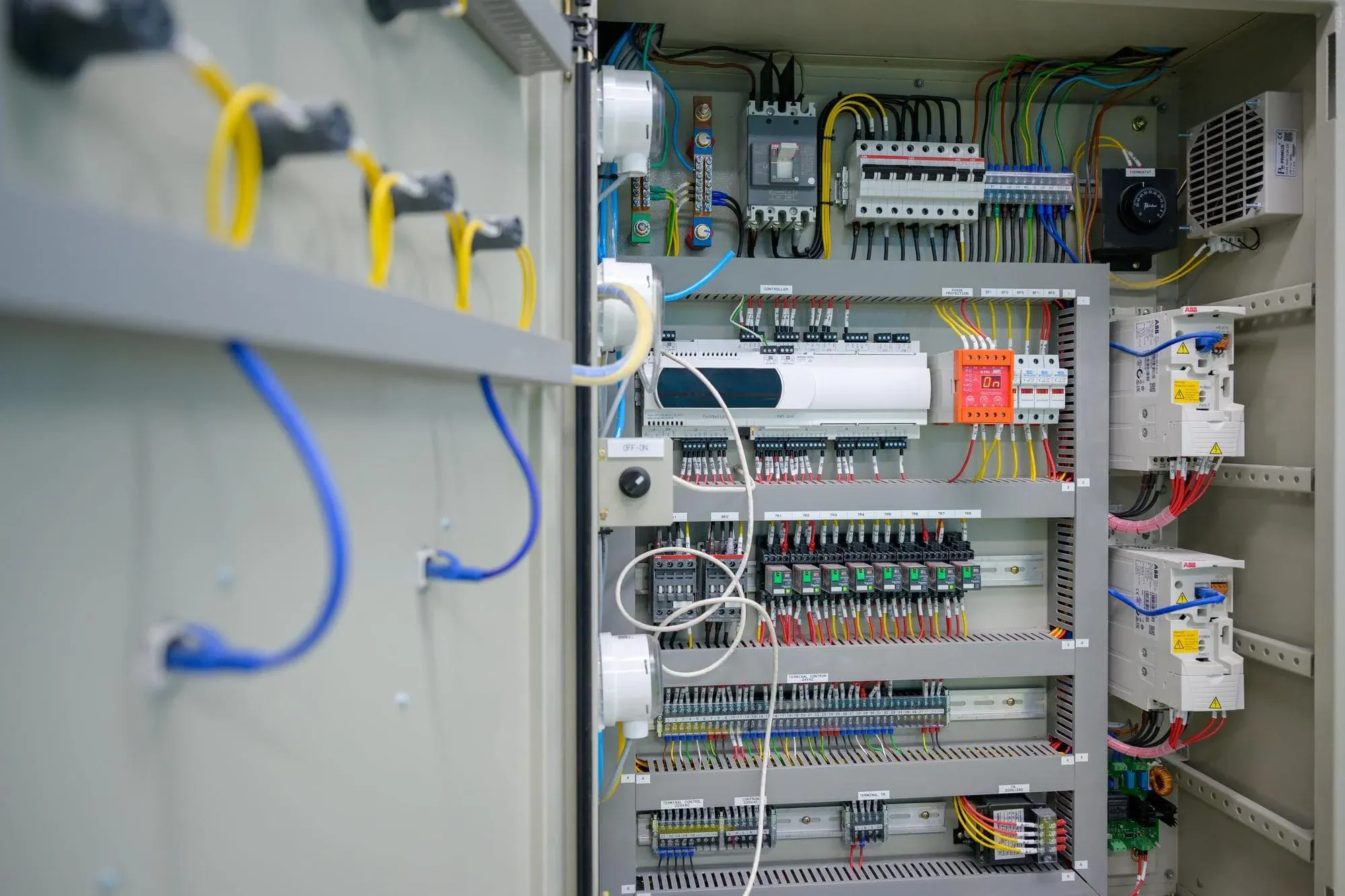
The panel is the main distribution point for the branch circuits serving a home. Electricity arrives from the service, passes through the main service equipment and is distributed through breakers to lighting, receptacles, appliances and mechanical equipment.
Circuit breakers provide overcurrent protection. If current exceeds the level the circuit is designed to carry, the breaker is intended to open before the conductors experience unsafe overheating.
The number printed on the main breaker, commonly 100, 125, 150 or 200 amps in residential installations, is only one part of the electrical picture.
At 120/240 volts, a nominal 100-amp single-phase service represents 24 kVA at 240 volts. A 200-amp service represents 48 kVA. That does not mean a homeowner can simply add appliances until their nameplate ratings total those amounts. Canadian Electrical Code load calculations use prescribed demand factors to determine the expected load on a service.
The panel is therefore both a distribution point and a clue to the capacity of the wider electrical system.
A Full Panel Is One of the Most Obvious Reasons to Investigate an Upgrade
Running out of breaker spaces becomes particularly common when an older house is renovated.
Modern kitchens may need several dedicated circuits. Basements gain bathrooms, bedrooms and entertainment areas. Garages acquire heaters, workshops or vehicle charging. Air conditioning and hot tubs introduce additional electrical equipment.
Eventually there may be nowhere appropriate to place another breaker.
That does not automatically mean the house needs more electrical service capacity. A larger panel or properly designed subpanel may provide additional circuit positions while the original service rating remains unchanged.
The distinction is important. More spaces for breakers are not the same as more electricity from the utility.
Tandem breakers should not be treated as an automatic solution either. They can only be installed where the panelboard is specifically designed and approved for their use. The fact that a breaker can physically be made to fit tells very little about whether the arrangement is permitted.
Frequent Breaker Trips Need Diagnosis Before They Need a Bigger Panel
Repeated tripping gets interpreted as proof that a panel is too small, but the actual cause may be much narrower.
If one branch breaker repeatedly trips when a toaster, kettle and another appliance operate on the same circuit, that circuit may simply be overloaded. A defective appliance or electrical fault can also cause a breaker to open.
A main breaker tripping when several large loads operate simultaneously raises a different question. In that situation, total building demand deserves closer examination.
Neither problem should be “fixed” by installing a breaker with a higher ampere rating without confirming that the circuit conductors and connected equipment are suitable for it. The breaker exists to protect the wiring. Increasing its rating can leave undersized conductors exposed to currents they were never intended to carry.
When the cause is unclear, a Calgary electrician can evaluate the affected circuits and determine whether the issue is a local fault, an overloaded branch circuit, deteriorated equipment or a genuine service-capacity problem.
Heat, Burning Odours and Discolouration Are More Urgent Warning Signs
Electrical connections should not be generating enough excess heat to scorch equipment or produce a persistent burning smell.
Loose or deteriorated connections can develop resistance. Current passing through that resistance creates heat, sometimes concentrated at a terminal, breaker connection or damaged busbar.
Signs worth taking seriously include visible scorching, melted insulation, unusual discolouration, crackling, persistent buzzing or a hot electrical smell near the panel.
These conditions are different from a panel simply being short of breaker spaces. They can indicate damaged electrical equipment that requires prompt assessment.
A panel should not be opened by someone unfamiliar with electrical service equipment. Even when the main breaker is switched off, portions of service equipment can remain energized.
Physical damage is therefore one of the stronger reasons to have the panel evaluated rather than waiting until a planned renovation.
Rust or Water Inside the Panel Is Not a Cosmetic Issue
Electrical equipment and uncontrolled moisture are a poor combination.
Water can enter through service equipment, penetrations, condensation or building defects. Once moisture reaches a panel, corrosion can affect breaker connections, busbars and other conductive components.
Surface rust on the enclosure does not always reveal what is happening inside, so the source and extent of moisture matter.
Replacing damaged equipment without correcting the path by which water entered can allow the problem to return. Likewise, painting over rust does nothing to restore corroded electrical connections.
If staining, rust or water is visible around electrical equipment, the underlying moisture source should be investigated along with the condition of the panel itself.
Older Fuse Equipment May Be a Reason to Reassess the Entire Installation
Some older homes still contain fuse-based distribution equipment.
A fuse system is not unsafe merely because it uses fuses. Properly rated fuses can provide effective overcurrent protection. The larger concern is whether the installation still suits the building’s present use and whether it has been altered correctly over the years.
Older systems may have limited circuit capacity, fewer distribution spaces and wiring arrangements that predate today’s appliances. Problems can also arise where inappropriate fuse sizes have been installed to prevent nuisance blowing.
A house that has undergone decades of additions deserves to be looked at as a complete electrical system. The original equipment may have been suitable for the loads that existed when it was installed, while today’s kitchen, laundry, cooling equipment and electronics tell a different story.
The decision should be based on condition and capacity, not on the simplistic claim that every fuse panel is inherently dangerous.
Major New Electrical Loads Can Make an Adequate Panel Inadequate for the Next Project
Sometimes the strongest sign that an upgrade is needed is not a defect at all. It is a future appliance.
Electric vehicles are a good example. Natural Resources Canada states that Level 2 EV charging operates at 208 or 240 volts. Depending on the charging equipment, installation may require a dedicated circuit ranging from roughly 20 to 100 amps.
That is large enough to change the load calculation of an otherwise ordinary home.
Heat pumps, electric resistance heating, hot tubs, air conditioning, induction cooking, secondary suites and electric water heating can have similar effects.
The City of Calgary specifically identifies EV charging, air conditioning, heat pumps, electric heating, energy storage, hot tubs and new secondary or backyard suites as projects that can significantly increase residential electrical demand. Before such work proceeds, a registered electrical contractor must confirm that the existing electrical system can accommodate the added load.
That assessment should happen before equipment is purchased wherever possible.
How Do You Know Whether a 100-Amp Service Is Still Enough?
The answer comes from a load calculation, not from the age or size of the house alone.
A modest home with gas space heating, gas water heating and relatively few large electrical loads may function comfortably on 100 amps. Another similarly sized home with electric heating, vehicle charging, a hot tub and an electric range can present a very different demand profile.
Alberta currently has CSA C22.1-24, the 26th edition of the Canadian Electrical Code, in force. It became effective throughout the province on April 1, 2025.
The Code provides the framework for determining service and feeder loads rather than simply adding together every breaker rating in the panel.
Calgary also states that homeowner permit holders cannot perform the required electrical load calculation themselves. It must be completed by a qualified electrician.
A 100-amp label therefore does not answer the question by itself. Actual and proposed loads do.
A 200-Amp Panel Does Not Necessarily Mean You Have 200-Amp Service
Panelboard ratings are often misunderstood.
A panel labelled for 200 amps may be capable of carrying that amount when installed as part of an appropriately designed system. That does not prove that the house is actually supplied by a 200-amp service.
Service conductors, meter equipment, the main overcurrent device and utility connection all have to support the service rating.
Likewise, replacing a 100-amp panel with equipment capable of 200 amps does not automatically double the amount of electricity available to the property.
If additional capacity is required, the work can extend beyond the panel itself and involve service conductors, metering equipment and coordination with ENMAX.
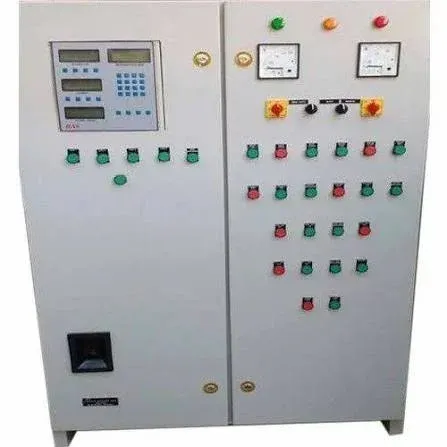
This is why “panel upgrade” can mean very different things from one project to another.
Adding a Subpanel Solves Space Problems, Not Service-Capacity Problems
A subpanel is useful when the main panel still has adequate electrical capacity but additional circuit distribution is needed.
Garages, workshops and basement renovations are common examples. Rather than replacing an otherwise suitable main panel simply for additional breaker positions, a properly sized feeder can supply another distribution panel.
What the subpanel cannot do is increase the total capacity entering the property.
If a load calculation shows that the service itself is insufficient, adding another box of breakers does not change that result.
This distinction helps avoid unnecessary upgrades in some homes and inadequate solutions in others.
Energy Management May Avoid a Service Upgrade in Certain Homes
A larger utility service is not always the only answer when a new electrical load exceeds available capacity.
The City of Calgary permits approved Energy Management Systems in appropriate installations. These systems manage selected electrical loads so that the home’s total demand stays within available service capacity.
For example, Calgary describes arrangements where an EV charger or hot tub can temporarily stop drawing power while another high-demand appliance, such as an electric range, is operating. The managed load resumes when sufficient capacity becomes available.
That can be an efficient solution because some loads are naturally flexible. An EV parked overnight does not necessarily need to draw maximum charging power at the exact moment the oven, dryer and other appliances are operating.
Energy management is not appropriate for every property or every appliance, however. The equipment has to meet applicable requirements and must be designed around the actual loads involved.
Renovations Are a Good Time to Think Beyond Today’s Electrical Needs
Panel decisions should not be made solely around the appliance being installed this month.
Suppose a homeowner is finishing a basement now, expects to purchase an EV within two years and is considering replacing a gas furnace with a heat pump later. Treating each project independently may lead to repeated electrical work.
The better approach is to discuss likely future loads while the electrical system is already being evaluated.
That does not mean automatically installing the largest available service. Oversizing can add cost without meaningful benefit.
It means avoiding a narrowly designed upgrade that leaves no reasonable path for equipment the homeowner already expects to add.
Renovations can also expose older modifications that deserve attention. Spliced conductors, overloaded boxes, improperly identified circuits or abandoned wiring may become visible once walls and ceilings are opened.
The panel is only one part of that broader assessment.
When Does an Upgrade Require ENMAX Involvement?
If the work changes the utility service rather than simply replacing downstream equipment, utility coordination becomes part of the project.
ENMAX’s temporary disconnect and reconnect process specifically covers replacement, rewiring or upgrading of a main electric panel, meter socket or mast. Before service is reconnected, an electrical permit and completed inspection or authorization from Calgary Electrical Inspections may be required.
ENMAX also states that its personnel are the only parties permitted to remove or install ENMAX-owned meters and handle the utility service connection. Contractors are not permitted to remove utility meters or disconnect energized utility service conductors themselves.
That makes a service upgrade more involved than replacing a group of breakers while power remains on.
Planning the outage, inspection and reconnection sequence is part of doing the work properly.
Can Homeowners Replace Their Own Main Panel in Calgary?
Not under Calgary’s homeowner electrical permit rules.
The City allows homeowners to perform certain electrical work under a homeowner permit when eligibility requirements are met. For example, a homeowner may tie into an existing main panel without physically altering it and may add a subpanel to an existing service where an existing main breaker is present.
The City specifically prohibits homeowners from installing, altering or modifying the main electrical service, including the main panel, main breaker and meter base. Homeowners are also prohibited from performing electrical work for EV charging, air conditioning, load-management systems and several other specialized installations.
Electrical contractors must obtain their own permits rather than working under a homeowner permit.
For a main-panel replacement or service-capacity change, professional involvement is therefore part of the local regulatory process, not merely a recommendation.
Modern Protective Devices Can Also Influence Panel Planning
Electrical protection has become more sophisticated over time.
A conventional circuit breaker primarily protects conductors against overcurrent. Ground-fault circuit interrupter protection is designed to respond to current leaking from the intended path, while arc-fault protection addresses certain hazardous arcing conditions.
Current Canadian Electrical Code requirements determine where these protections are required for new and altered work.
An older panel may have physical or equipment limitations that complicate the addition of contemporary protective devices. A newer panel with equipment specifically approved for the system can make future circuit additions more straightforward.
Still, a panel replacement should not be described as automatically converting every existing circuit in an older house to current new-construction standards. Requirements depend on the work being undertaken, existing conditions and the authority having jurisdiction.
What Should Be Checked Before Deciding to Upgrade?
A useful panel assessment looks beyond the number on the door.
The electrician will generally need to establish the service rating, condition of the panel and breakers, available circuit spaces and proposed new loads. Existing service conductors and meter equipment may become relevant if increased capacity is being considered.
The condition of grounding and bonding arrangements, visible modifications and any evidence of overheating or corrosion can also affect the recommendation.
Future plans matter as well. Installing an EV charger six months after completing a panel project is very different from learning about that plan while the electrical design is still being developed.
A Calgary electrician can then distinguish between four possibilities that homeowners often group together: repairing an existing problem, replacing the panel without increasing service size, adding distribution space, or carrying out a complete service upgrade.
They are not interchangeable projects.
FAQs About Electrical Panel
Does a frequently tripping breaker mean I need a panel upgrade?
Not necessarily. A repeatedly tripping branch breaker can indicate an overloaded circuit, faulty appliance or electrical fault. If the main breaker trips when several major loads operate together, total service capacity may deserve investigation. The cause should be diagnosed before equipment is replaced.
Can I upgrade from 100 amps to 200 amps just by replacing the panel?
No. A true service-capacity increase requires all relevant components, including service conductors, overcurrent equipment, metering arrangements and the utility connection, to be suitable for the higher rating.
Do I need a 200-amp service for an EV charger?
Not automatically. Level 2 charging can create a substantial new electrical load, but some 100-amp or other existing services can accommodate charging after a proper load calculation. Approved energy-management equipment may also be an option in certain Calgary homes.
Is an electrical permit required for a main-panel upgrade in Calgary?
Yes, regulated electrical work involving the main service requires the appropriate permitting process. Calgary does not permit homeowners to alter the main electrical service, main panel, main breaker or meter base under a homeowner electrical permit.
Upgrade Because the Electrical System Needs It, Not Because of a Number
An electrical panel should not be replaced simply because it is 20 or 30 years old, nor should an installation be assumed adequate because the lights still work and the breakers rarely trip.
Condition, capacity and future demand tell a much more useful story.
Heat damage, corrosion and deteriorated equipment point toward safety concerns. A full panel may indicate a distribution-space problem. EV charging, heat pumps, air conditioning and other substantial additions raise questions about load. Sometimes a larger panel solves the issue. Sometimes the service itself needs to change. In other homes, a subpanel or approved load-management system is the more appropriate answer.
The electrical system should ultimately fit the house that exists now and the one it is realistically becoming. That decision is best made from measured conditions and a proper load calculation rather than from assumptions about what a modern home is “supposed” to have.