When designing circuits, testing PCBs, or repairing electronic equipment, a reliable power source is essential. The best digital linear bench power supplies let you adjust voltage and current, monitor power consumption, and protect your circuits during testing. They are especially useful for electronics engineers, technicians, students, and hobbyists who need a stable DC supply on their workbench.
However, choosing the right unit can be confusing because manufacturers offer different voltage ranges, current ratings, output channels, and digital control features. This guide compares several popular models and explains the difference between linear regulation and digital control so you can choose a power supply that suits your work and budget.
What Is a Digital Linear Bench Power Supply?
A digital linear bench power supply is a laboratory instrument that provides adjustable DC voltage and current. It uses a linear regulation stage to control its output and a digital display or control system to make adjustments and monitor operating values.
These power supplies are commonly used to test electronic circuits, microcontrollers, sensors, amplifiers, and other devices that require a controlled DC source.
Most laboratory bench supplies offer two important operating modes:
- Constant voltage (CV): The supply maintains the selected voltage while the load current remains within the set limit.
- Constant current (CC): The supply limits current to the selected value, allowing the output voltage to fall as needed.
For example, when testing a new PCB, you might set the supply to 5 V and limit the current to 200 mA. If the circuit has a short circuit or draws excessive current, the supply can enter current-limit mode instead of continuing to deliver unrestricted current.
A good bench supply should also offer adjustable output, clear voltage and current readings, short-circuit protection, and suitable overload protection.
What Are the Best Digital Linear Bench Power Supplies?
The best choice depends on whether you need a simple single-output supply, several independent voltage rails, or programmable control for automated testing. The following models are worth comparing based on their published specifications and intended uses.
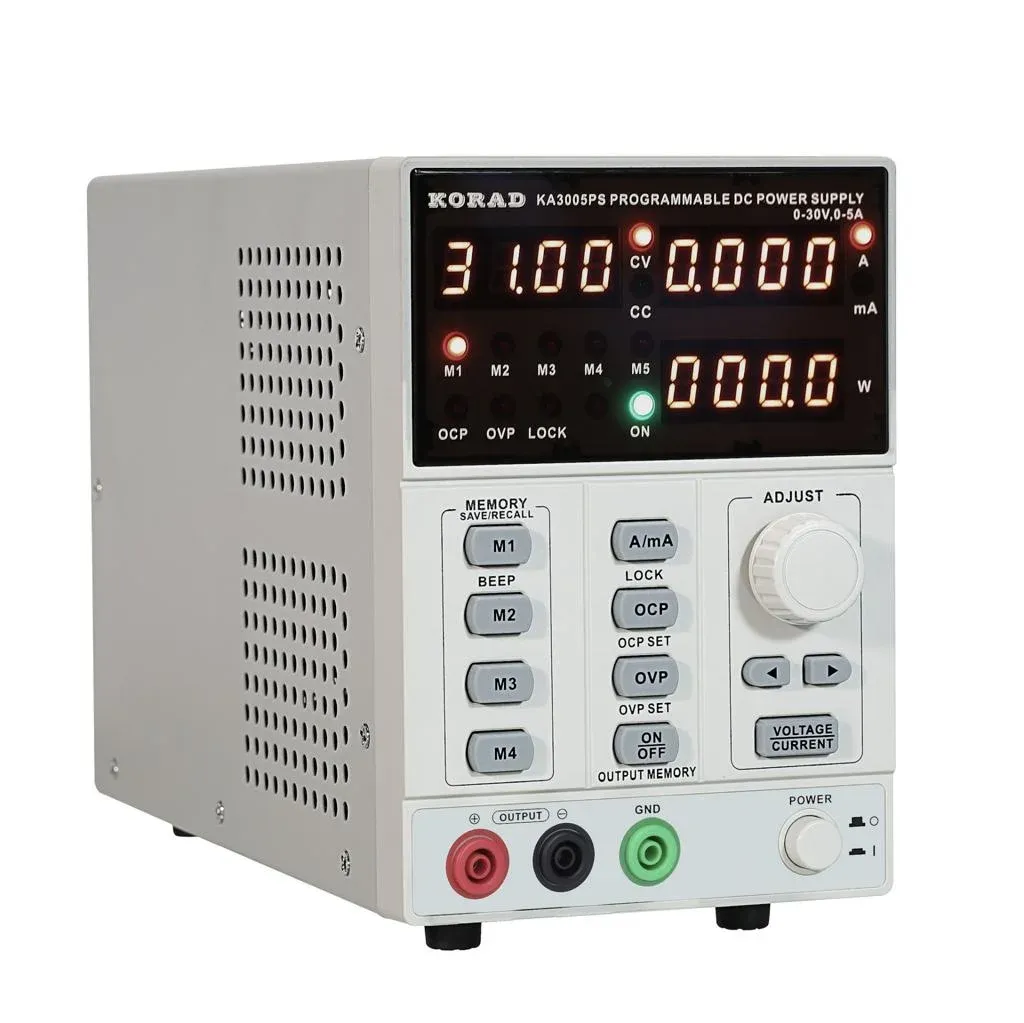
1. KORAD KA3005PS — Best for Beginners
Single output · 0–30 V · 0–5 A
The KORAD KA3005PS is a practical choice for students, repair technicians, and electronics hobbyists. Its adjustable voltage, current limiting, digital readout, and computer interface make it suitable for powering microcontroller boards, small circuits, and general PCB testing. Published specifications list ripple at 2 mV RMS or less.
Best for: Everyday electronics testing on a limited budget.
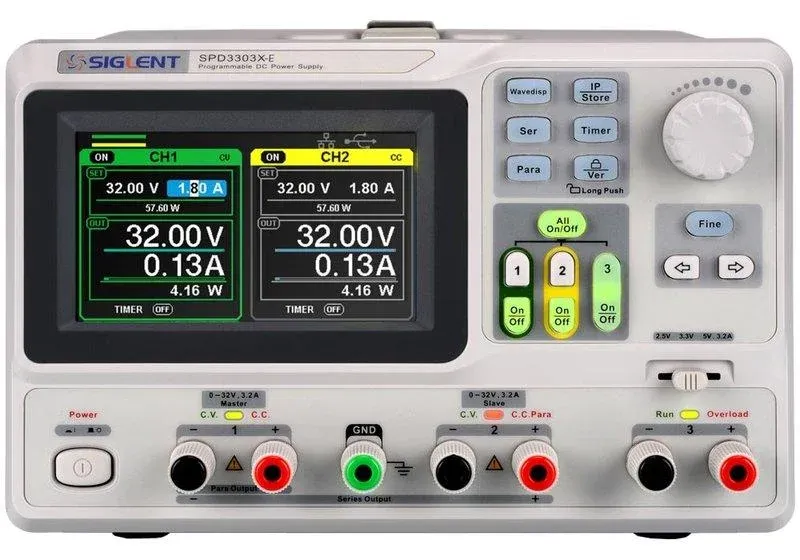
2. Siglent SPD3303X-E — Best for Multiple Outputs
Three outputs · 220 W total
This model provides two adjustable outputs rated up to 32 V and 3.2 A each, plus a third output selectable at 2.5 V, 3.3 V, or 5 V. Its channels can operate independently or in series and parallel modes, subject to the manufacturer’s limits. USB and LAN connectivity support computer-based control.
Best for: PCB development, analog circuits, and projects needing several supply rails.
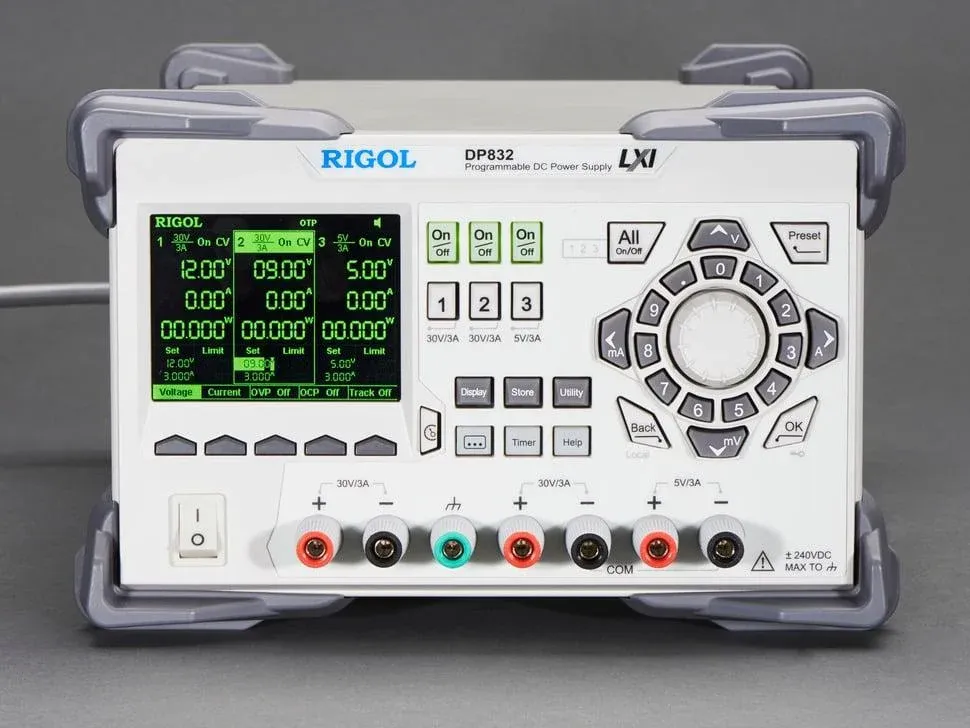
3. Rigol DP832 — Best for Laboratory Work
Three outputs · 195 W total
The Rigol DP832 offers two adjustable channels rated up to 30 V and 3 A, plus a 5 V, 3 A channel. It is designed for controlled laboratory testing and provides voltage, current, and power monitoring. Its published ripple and noise specifications make it worth considering for sensitive electronic circuits.
Best for: Engineering laboratories, repeatable tests, and multi-rail circuits.
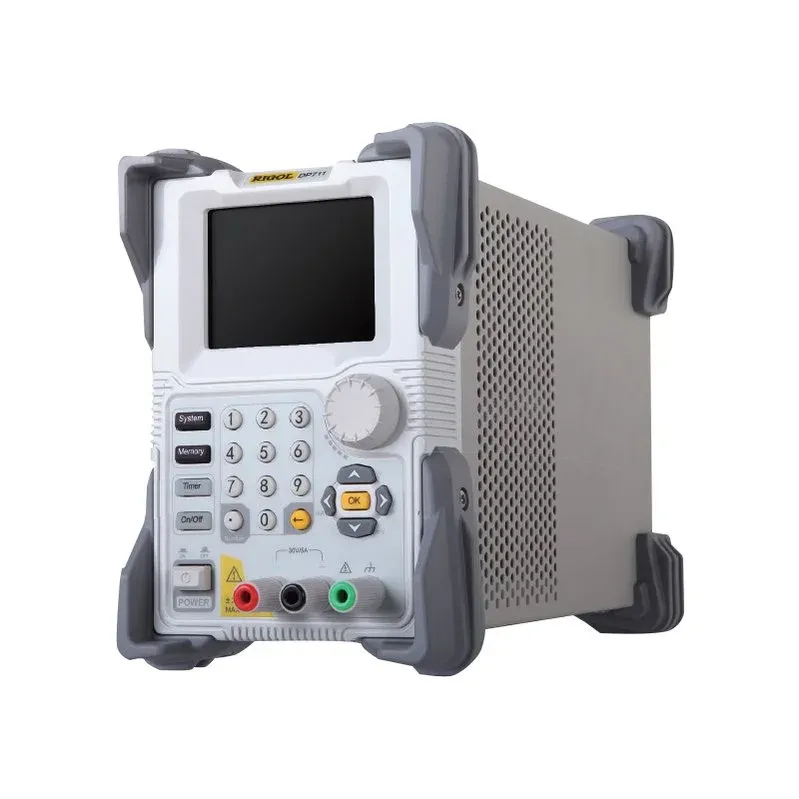
4. Rigol DP711 — Best for a Single Precision Output
Single output · Up to 30 V · 5 A
If you do not need three channels, the DP711 is a focused alternative. It offers a programmable linear output, with overvoltage and overcurrent protection. Its single-output design is useful for testing one board or circuit at a time.
Best for: Engineers who want a dedicated, adjustable DC output.
Specifications and availability can vary by model version and seller, so confirm the manufacturer’s current datasheet before buying.
Linear Versus Digital Bench Power Supply: What Is the Difference?
The phrase “linear versus digital bench power supply” can be confusing because these terms describe different features. A linear supply regulates voltage using a linear control stage, while digital usually refers to its display, adjustment, measurement, or programming system.
A supply can therefore be both linear and digital.
| Feature | Linear regulation | Digital interface |
|---|---|---|
| Main purpose | Regulates the output voltage and current | Controls settings and displays readings |
| Key benefit | Often low output noise | Easy, repeatable adjustments and monitoring |
| Main limitation | Can be less efficient and produce more heat | Adds cost and complexity |
| Typical use | Sensitive analog circuits and measurements | Convenient testing and automated workflows |
If you are comparing a linear supply with a switching supply, the trade-off is different. Linear supplies often offer low ripple and noise, while switching supplies are usually lighter, more efficient, and better suited to applications that need high power in a compact unit. The actual performance depends on the model and its specifications.
What to Consider Before Buying a Digital Linear Bench Power Supply
Before choosing a model, compare the following features with the requirements of your electronics projects.
Voltage and current range
A supply rated at 30 V and 5 A is suitable for many common electronics tasks. If you test higher-voltage circuits or power-hungry devices, you may need a different range. Always check the maximum output power as well as the voltage and current ratings.
Number of output channels
A single channel is usually enough for basic microcontroller and PCB testing. Two or more channels are useful when a circuit needs separate analog and digital supplies or positive and negative voltage rails.
Current limiting and protection
Current limiting is one of the most important features. It helps reduce damage if a circuit draws excessive current. Also look for overvoltage protection, overcurrent protection, and a clearly accessible output-enable control.
Ripple and noise
Low ripple is particularly useful when testing audio amplifiers, sensors, operational amplifiers, and other sensitive analog circuits. Compare manufacturer specifications using the same measurement units and bandwidth.
Digital controls and connectivity
A digital display makes voltage and current readings easy to monitor. USB or LAN connectivity can be useful for recording measurements, repeating tests, and controlling the supply from a computer. If you only perform manual repairs, advanced programming may not be necessary.
Build quality and local support
Check the warranty, availability of replacement parts, and service support in your region. For buyers in Pakistan, also confirm compatibility with the local mains supply and the availability of a reliable seller.
How to Use a Bench Power Supply Safely
A bench power supply can help protect your circuit, but only when it is configured correctly.
- Check the voltage and current requirements of the circuit before connecting it.
- Set the output voltage to the required value.
- Set a conservative current limit based on the expected current draw.
- Keep the output disabled while connecting the positive and negative leads.
- Check polarity and ensure there are no short circuits.
- Enable the output and monitor the voltage, current, and CV/CC indicators.
Never assume that a current limit makes an incorrect voltage safe. Always verify your settings before powering a PCB. Follow the manufacturer’s instructions when testing batteries, and use a suitable battery charger when automatic charging and termination are required.
Conclusion
The best digital linear bench power supply depends on your budget, testing requirements, and the types of circuits you build. The KORAD KA3005PS is a practical starting point for general electronics work, while the Siglent SPD3303X-E offers multiple outputs for more complex projects. The Rigol DP832 is another option for laboratory testing, and the DP711 suits users who prefer a single adjustable output.
When comparing linear versus digital bench power supply features, remember that linear describes the regulation method, while digital describes the control and display system. Prioritize suitable voltage and current ratings, low ripple, effective current limiting, and dependable protection before paying extra for advanced features.
Frequently Asked Questions
What is the best bench power supply for electronics beginners?
A 0–30 V, 0–5 A supply with adjustable current limiting is a good starting point for many electronics projects. The KORAD KA3005PS is one option worth comparing with other models in your budget.
Is a linear bench power supply better than a switching power supply?
A linear supply is often preferable for low-noise analog testing. A switching supply may be better when efficiency, portability, or higher power is more important. The best choice depends on the circuit and the actual performance specifications.
What is the difference between a digital and a linear power supply?
Linear refers to how the supply regulates its output voltage. Digital usually describes its display, controls, or programmable features. A power supply can use linear regulation and still have digital controls.