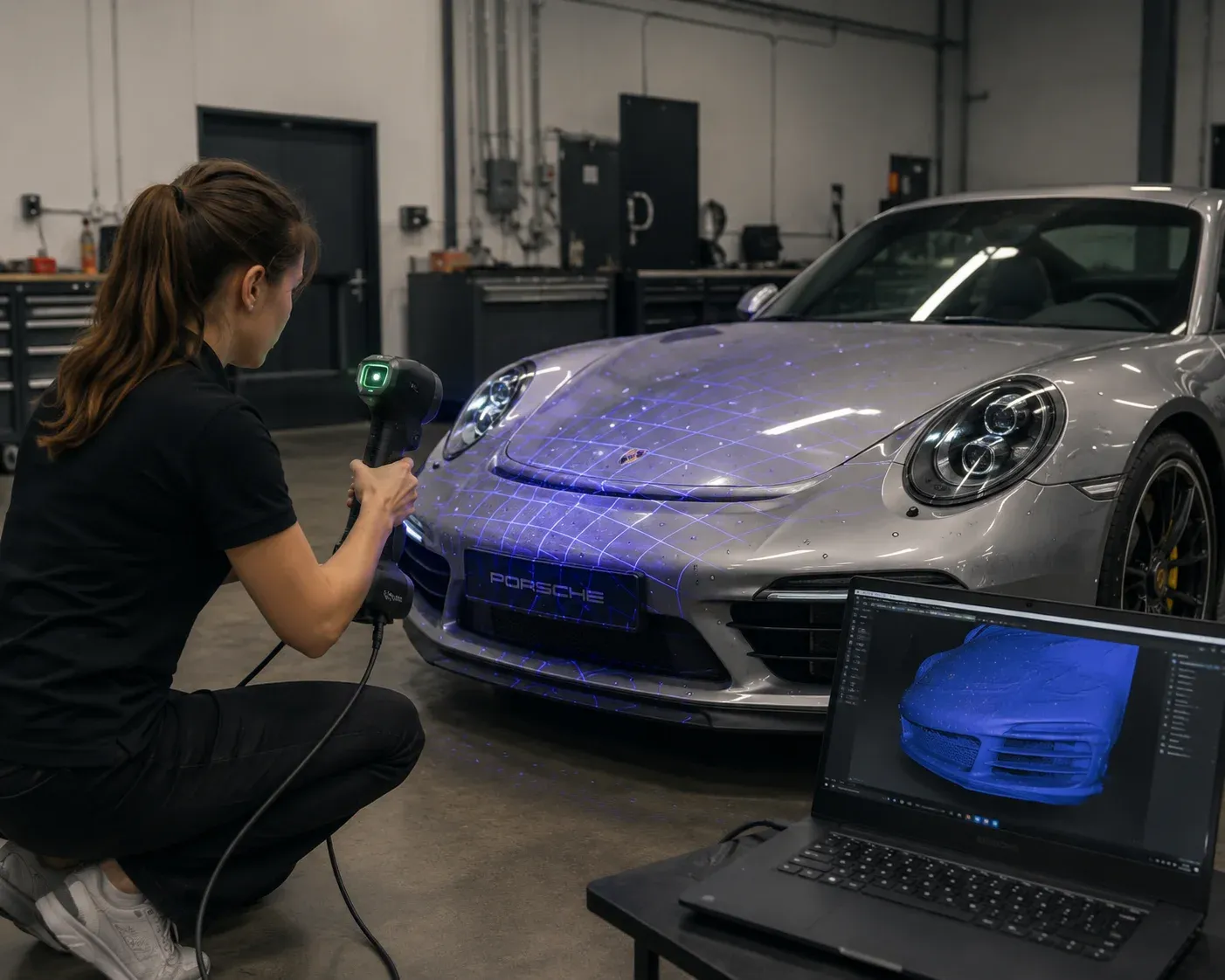
Accurate measurement and inspection are essential in industrial engineering, electrical systems, maintenance, manufacturing, and equipment design. Even small dimensional errors can create installation problems, alignment issues, vibration, premature wear, or costly rework during fabrication and assembly. In many industrial projects, teams are working with existing machinery, aging equipment, electrical enclosures, custom-fabricated parts, or modified systems where original CAD files are missing or outdated.
Components may have been repaired multiple times, modified in the field, or exposed to years of stress and vibration. In these situations, relying only on manual measurement can create unnecessary risk and reduce overall accuracy. This is where professional 3D scanning services are becoming increasingly important for industrial inspection, reverse engineering, maintenance planning, and engineering documentation. Instead of measuring only selected dimensions, 3D scanning captures the complete surface geometry of a part, assembly, or environment and converts it into usable digital data. For industrial and electrical engineering teams, this allows more accurate planning, faster redesign work, improved inspection workflows, and better integration between physical components and digital engineering systems.
Why Accurate Reality Capture Matters
Industrial systems are rarely simple. A single machine or electrical installation may include mounting plates, housings, brackets, support frames, connectors, sheet metal covers, cable trays, and custom-fabricated components that all need to fit correctly together. Traditional measuring tools still have value, but they become difficult to use when the geometry is complex or access is limited. Curved surfaces, worn parts, hidden mounting areas, and irregular shapes can create challenges for manual measurement. In many cases, even a small mistake can affect the final fitment of replacement or upgraded components. 3D scanning helps solve these problems by capturing the real geometry of the object instead of relying only on selected measurements. This provides engineers with a more complete digital reference before redesign, manufacturing, or installation begins.
- Charging EV: A Beginner’s Guide to Electric Vehicle Ownership
- 3D Scanning in Industrial Inspection and Engineering Applications
How the Technology Works
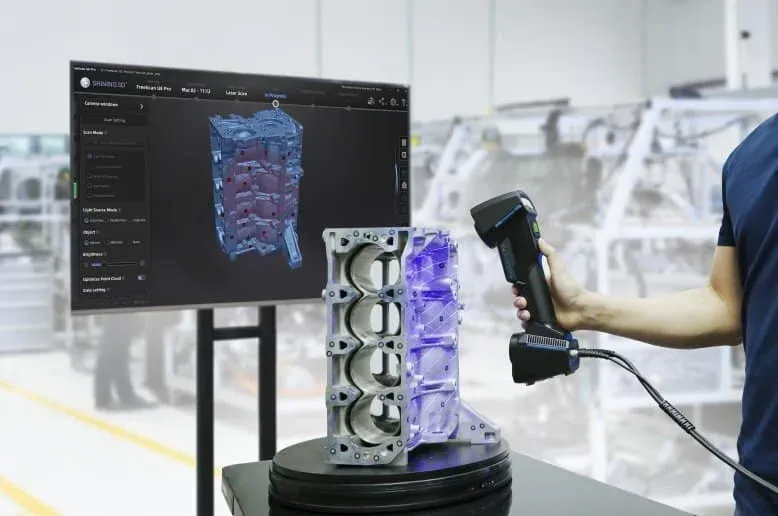
Modern 3D scanners use laser or structured-light systems to capture millions of points from the surface of an object or environment. These points form a point cloud, which represents the real-world geometry and position of the scanned subject. Depending on the project, handheld scanners may be used for detailed industrial parts, while larger LiDAR systems may capture rooms, facilities, infrastructure, or equipment layouts. After scanning, the data is processed and cleaned. Multiple scans are aligned together, unnecessary data is removed, and the geometry is prepared for engineering use. The final deliverable may include a point cloud, mesh model, CAD reconstruction, STEP file, or inspection report, depending on the needs of the project.
Applications in Industrial and Electrical Engineering
3D scanning is used in many engineering and maintenance applications. Industrial facilities often use scanning to document existing conditions before upgrades or modifications begin. Common uses include:
- Scanning electrical enclosures and panels.
- Capturing industrial machinery geometry.
- Reverse engineering obsolete parts.
- Inspection of damaged or worn components.
- Layout documentation for retrofits.
- Clearance verification before installation.
- Capturing pipe routes and support structures.
- Creating CAD models from existing parts.
- For electrical engineering projects, scanning can help document panel layouts, mounting locations, cable routing paths, and existing equipment positions before new systems are installed.
- This improves planning accuracy and reduces the chance of interference problems during installation.
Benefits Compared to Manual Measurement
One of the main advantages of 3D scanning is speed. 3D scanners can capture large amounts of geometric information in a short period without requiring engineers to manually measure every feature individually. Another major advantage is accuracy on complex shapes. Traditional tools work well for simple dimensions, but become difficult to use on curved surfaces, irregular geometries, or worn parts. A scanner captures the full surface condition of the object, creating a more complete digital reference. The digital data can also be reused later. Engineers can return to the scan and extract additional measurements without physically revisiting the part or site. This creates a more flexible workflow for engineering, maintenance, and redesign projects.
Practical Example
Engineers may need to modify an industrial motor housing to support a new electrical assembly. The original CAD file is unavailable, and the housing includes curved surfaces, mounting bosses, and tight clearance areas. Using manual measurement alone may miss important details that affect fitment. Engineers can digitally capture the housing with 3D scanning and rebuild it into a CAD model. Engineers can then design around the part’s actual geometry and verify fitment before manufacturing begins. This reduces trial and error, improves efficiency, and helps avoid costly fabrication mistakes.
Final Thoughts
3D scanning continues to become an important tool across industrial and electrical engineering environments. It allows teams to capture accurate, real-world geometry quickly and convert physical systems into usable digital information. As industrial equipment becomes more complex and engineering workflows continue to rely on digital systems, accurate reality capture will play an even larger role in inspection, redesign, maintenance, and future development.